

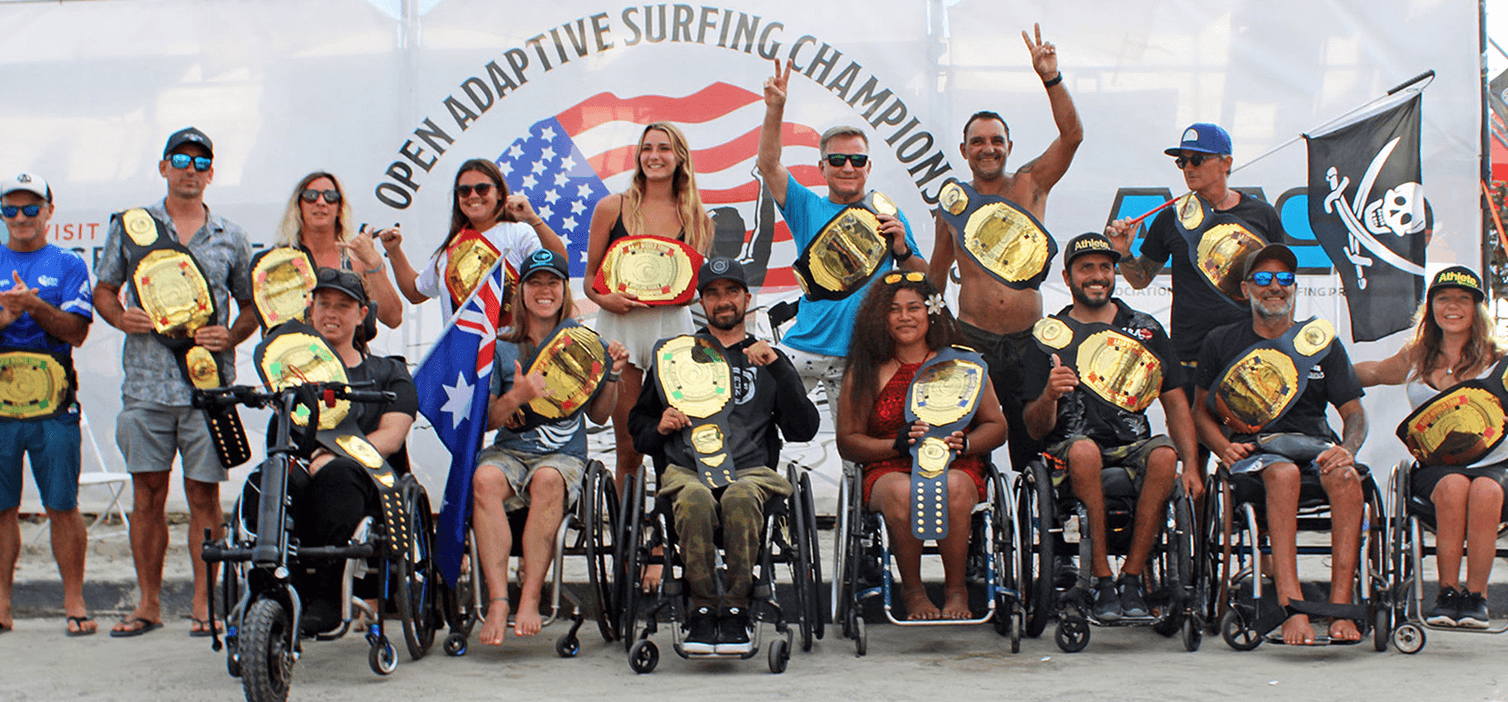
U.S. Open Adaptive Surfing Returns to Oceanside September 10-13
Four days of world-class adaptive surfing are coming to Oceanside Pier as competitors prepare for the ninth annual U.S. Open Adaptive Surfing Championships.
The event returns to the north side of the pier September 10-13, bringing the final scheduled stop of the 2026 Association of Adaptive Surfing Professionals World Championship Tour to Southern California.
This is not simply an exhibition or feel-good beach gathering. It is a professional competition with athlete classifications, judging, rankings and prize money on the line.
It also gives Southern California spectators an opportunity to see how adaptive surfers, equipment designers, support teams and organizers continue expanding what is possible in the water.
Oceanside Closes the 2026 World Tour
The Association of Adaptive Surfing Professionals scheduled three international championship stops for 2026.
The season began with the Australian Pro Adaptive Surfing Championships in Byron Bay, followed by the Hawai’i Adaptive Surfing Championships at Waikiki. The U.S. Open in Oceanside is the third and final scheduled stop.
The tour’s international reach has grown significantly. In 2025, the AASP reported awarding more than $120,000 across its three events and overall championship purse, with prize money going to adaptive surfers representing 19 countries.
Oceanside has become a fitting location for the finale. The city has a deep competitive surfing history, a highly visible pier and an established community of surf organizations, volunteers and accessible recreation advocates.
The U.S. Open was created by the Stoke for Life Foundation, a nonprofit organization focused on ocean therapy, adaptive water sports and improved beach access for people with disabilities.
Understanding Adaptive Surfing Divisions
One of the most interesting elements of the competition is its classification system.
Athletes are not placed into one broad adaptive category. They are evaluated and assigned to surf classes intended to create fair competition among surfers with similar functional abilities and riding positions.
According to the event’s official classification and surf class guide, competitors may be classified one or two days before the event. Assessments take place at the event site and may include an in-water observation.
The competitive classes include:
- Upper Limb Standing
- Below the Knee Standing
- Above the Knee Standing
- Any Knee Kneeling
- Waveski
- Unassisted Prone
- Prone Assist
- Blind or No Vision
- Blind, Low or Partial Vision
These classifications reflect how an athlete rides, paddles and returns to the board safely. They also illustrate why adaptive surfing cannot be reduced to one equipment setup or competition format.
Some surfers compete standing. Others ride kneeling, seated on a waveski or in a prone position. Certain prone competitors surf independently, while others are permitted assistance paddling into waves and returning to their boards.
Athletes with visual impairments compete in separate classifications based on their level of vision.
More Than a Competition
The Stoke for Life Foundation uses adaptive surfing and paddleboarding to highlight the rehabilitative benefits of water sports while promoting greater access to beaches and ocean recreation.
Its work includes adaptive surfing and paddling clinics, equipment education and hands-on instruction for volunteers assisting participants with different disabilities.
That access component is important.
A great surf break means little if an athlete cannot cross the sand, reach the water safely or find equipment appropriate for their needs. Adaptive surfing’s progression depends on the athletes, but also on thoughtful beach design, trained support teams and continued equipment development.
The U.S. Open brings all of those elements together in one highly visible location.
What Spectators Should Watch
For spectators unfamiliar with adaptive competition, the different divisions are worth following closely.
Watch how athletes adjust their lines and positioning based on riding stance and equipment. In the prone and waveski divisions, rail control, upper-body positioning and reading the wave become especially visible.
The assisted divisions also demonstrate the precision required from the athlete’s support team. Assistance may help a competitor enter the wave, but the athlete still has to control the board, choose a line and complete the ride.
In the visually impaired divisions, communication and trust are important elements before and during the ride, but judging still centers on surfing performance.
Event Details
- What:
- Ninth Annual U.S. Open Adaptive Surfing Championships
- When:
- Thursday, September 10 through Sunday, September 13, 2026
- Where:
- North side of Oceanside Pier, 300 N. The Strand, Oceanside, California
- Organizer:
- Stoke for Life Foundation and the U.S. Open Adaptive Surfing Championships Competition Committee
Heat times and competition schedules may change with conditions. Follow the official event website and LiveHeats for the latest information.
